
[6 minute read]
TL;DR: We all experience changes in life. Transitions often require significant adjustment as we deal with letting go of the old and welcoming the new. Often there is a range of feelings involved that need time and care to process. Our sense of identity may be affected by changes in roles or as we develop new abilities to cope and adapt. Navigating change is easier with supports in the form of family, friends and community resources. Access to meaningful resources is a significant contributor to resilience. Strategies and resources for coping with change are included.
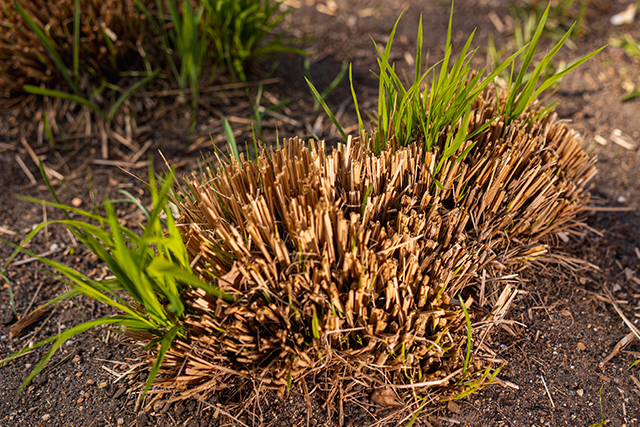
I’m working on my spring garden work, cutting back the old stems from last year and clearing them away to make room for new growth. I’m not a very avid gardener, but I am trying to create a small space featuring native Ontario plants to attract bees, butterflies and birds.
As I’m pulling out the dead stalks from last year’s flowers, I’m thinking of the different seasons and times of transition. I’m learning that when old stalks and flower heads are left in place during the winter, the seeds are food for the birds and the hollow stalks protect insects through the winter. Clearing them away too early in the spring interferes with their natural life cycles. But letting them linger means tolerating a messy garden for a time.
Transitioning through seasons of change isn’t always tidy. The range of feelings and the time involved can make some changes very challenging. Whether the changes we experience are ones we chose or ones forced upon us makes a huge difference to how we experience them. And the resources and supports we have around us help shape how resilient we are in the face of change.
In our work as therapists at Shalem, a lot of what we do is supporting people who are dealing with some kind of change or transition. Coping with the loss of a family member, becoming an empty nester, losing a job, trying to decide what to do after graduation, dealing with a new health diagnosis – all of these are topics we hear about in our counselling work. They all involve change and transition.
Changes are inevitable
There are many types of changes we experience over our lives. Many are inevitable, like the changing seasons. We grow older, have birthdays, graduate from elementary school and move on to high school, and maybe attend a college or university and then seek a job.
Some are changes we choose: we move to a new city, pursue a new relationship, start a new job, or retire.
Some changes happen to us: we lose a job, develop a debilitating health issue, or have a partner walk out on us. However the changes happen, we are forced to adjust.
Significant changes are often marked by celebrations or rituals. Gathering for birthday parties, eating pizza with friends as they help us move house, graduation ceremonies and weddings are ways we mark times of change, honour endings, and celebrate new beginnings. Similarly, funerals are important opportunities to gather together to celebrate the life of a loved one and grieve their passing.
Other changes don’t come with obvious rituals, and the lack of these can leave us feeling alone and unsupported. There is no party when we are laid off, and no common public ritual for divorce. Sometimes these experiences prompt us to find informal ways to mark these moments.
Everyone deals with change in their own way and in their own timing. There is no one right way to adjust.
Adjusting to change is a process
Various social pressures and cultural messages can imply that we should be able to adjust quickly to changes in our lives. Family and friends often expect us to be further along in the process after a significant loss, which can leave us feeling defective or unseen.
The reality is that significant life transitions typically involve a wide range of feelings and thoughts to work through.
Changes generally involve the end of something. Even welcome changes may cause us to leave behind some things that we miss and losses we grieve. When we graduate or retire, we may miss the people we worked or studied with, or lose an important mentor or community. We may lose our sense of purpose, or a sense of identity that comes with our roles as learner or professional. It is often helpful to name these loses and make space to grieve them.
Change involves both loss and new beginnings
When we can choose or anticipate a change, we often do a lot of the emotional processing ahead of time, working through the various feelings and coming to terms with the change in the months or even years before it happens. By the time the change actually occurs, it can look like an easy adjustment to those who haven’t seen the previous emotional work involved.
When change is sprung on us unexpectedly, we have all the processing to do after the fact, often leaving us with a lot of intense feelings and the added layer of a sense loss of control.
We might find ourselves in a time of uncertainty – a time between the old and the new. If we don’t know what is coming next, we could be dealing with fear and anxiety, possibly mixed with excitement and anticipation that comes with the opportunity for something new.
We may find ourselves weaving back and forth between the various perspectives, one hour feeling the thrill of new possibilities and the next hour the paralysis of fear and overwhelm. Making space for the whole range of reactions with compassionate acceptance of all of them can help.
Challenges our sense of identity
Sometimes new roles and opportunities cause us to challenge or expand our sense of identity. Becoming a new parent, for example, stretches us in many ways, and adds a new name and identity. When someone who identifies with their job retires, it may invite a time of reassessing what gives life meaning, purpose and focus, as well as who they are in the world without their former professional title. Starting or ending a significant relationship can involve evolutions of identity in becoming someone’s partner, or becoming someone who is newly single.
On another level, processing changes and transitions may help us grow or strengthen more personal aspects of our identity. We may discover ourselves to be survivors, rather than victims. We may be able to recognize ourselves as resilient, or as learners, or discover some other aspect of our personality and identity that becomes more fully developed as we successfully work through the transition.
In fact, holding on to some valued aspect of our identity can often help us through challenging transitions. There is strength in knowing the kind of person we choose to be in response to whatever life throws at us, and living into that identity.
Strategies and Resources for Coping with Change:
When our attention is taken up with coping with extra things related to changes and transitions, it can be helpful to be intentional about self-care:
Physical: Prioritizing sleep, movement and eating well. Because emotions are worked through our bodies and our nervous system, caring for our physical needs is important.
Emotional: Recognizing that emotions require some time to be felt and tended to, it can be helpful to create space for this. Practices like talking things through with a friend or therapist, journaling, making art, or having a big cry can help us process the range of feelings we have.
Cognitive: Facing uncertainty can leave us with thoughts on overdrive, making it hard to clear our heads to sleep. Making time for productive planning, writing out pros & cons, and other thoughtful decision-making processes can reduce the time spent in unproductive rumination and worry.
Spiritual: Engaging spiritually with the choices and decisions we are facing can be very helpful. Spiritual practices for discernment and seeking spiritual counsel may be resources to lean into during times of change.
Relational: While some may seek out the company of others during times of change, others may find themselves withdrawing and working through things on their own. There is no right way to work through change. Many find it helpful to access the support of loved ones and community members while going through challenging transitions. Getting professional care from a therapist can also be helpful in some situations.
Community resources such as parent and baby drop-in play groups, bereavement support groups such as Griefshare, or DivorceCare groups can be a great resource.
Supports, resources, celebrations and rituals help
Navigating change is easier with supports in the form of family, friends and community resources. Rituals like graduation ceremonies, home-warming parties, weddings and funerals are times for us to receive the tangible support of our community during these transitions.
Michael Ungar, resiliency researcher at Dalhousie University, points out that an individual’s resilience has less to do with individual strengths and more to do with our ability to access meaningful resources. Those who have social supports, access to community resources and meaningful connections with others are more able to navigate significant changes well.
Knowing this might be the encouragement that we need to resist the idea that we need to push through a hard time on our own and instead reach out to our friends, or ask for help. Seeking out a conversation with a friend, pastoral care, spiritual guidance, or psychotherapy can provide the extra care we need during challenging transitions.
And if you are walking along side someone going through a time of change, your support can be part of what contributes to a successful journey through the transition that results in greater resilience.
Susan Winter Fledderus is a Clinical Therapist at Shalem Mental Health Network
How Faith Communities can Support Someone Going Through a Time of Change:
Show up: Churches and faith communities often have a good track record for bringing meals after a death in the family or when a new baby is born. There may be other less obvious occasions where similar gestures of care would be welcome. Being a community where people to show up authentically regardless of what is going on in their lives requires being good at genuine care of each other.
Stay in: Many changes involve an extended season of change and uncertainty. Families dealing with separation and discerning whether to reunite or divorce often require months or sometimes years of ongoing support. Adjusting to a new chronic health issue takes a long time. People often report feeling left behind and isolated when their situation doesn’t resolve quickly and the rest of the church’s attention and care drops off.
Slow down: Clergy and pastoral care providers often expect people to be further ahead in their journeys of grief and adjustment than they often are. In situations of divorce the emotional, mental, spiritual and relational adjustment often takes several years. Walk alongside without judgement and without pushing for a specific shift or rate of progress.
Listen/Shut up: Listening and being present with someone dealing with a challenging transition are more important than offering advice. Advice is rarely followed. Instead, supporting someone’s discernment process involves facilitating their own discovery of the next best step.
Spiritual Care without spiritual bypassing: Create space for someone to share the whole range of feelings without pressure for them to show up as having their faith unshaken or to continue to show joy in hardship, or to praise God when their hearts can’t access praise. Recognize the real spiritual impacts of challenging transitions while watching for signs of God at work. Sensitivity is required to discern what spiritual resources, scriptures or prayers are helpful in a given moment as every situation is unique.
Seek additional resources: There are times when individuals and families need more than the spiritual care or pastoral counselling faith communities can provide. Referrals to professional social workers, psychotherapists, shelter services, medical doctors, mental health care providers, and support groups can broaden the range of care.
See who else needs care: Are there children or youth who need extra care while their parents are separating? Perhaps senior parents are struggling after their kids divorce or their grandchild comes out. A Sunday School class may need care after one of the children has an accident. Perhaps the whole community would benefit from a restorative conversation after a significant change or time of transition.
Additional Resources:
Laura Young: Coping with Change: Practical Strategies for Life Transitions
Patricia Di Giorgio: Why Change Can Feel So Unsettling
Linda Graham (2013). Bouncing Back: Rewiring your Brain for Maximum Resilience and Well-Being. Novato: New World Library.
Michael Ungar (2019). Change Your World: The Science of Resilience and the True Path to Success. Sutherland House.